Why Pacific Northwest Roofs Fail Early: The Climate Reality Behind Premature Roof Replacement
By Aaron Cope, Owner, Raven Roofing Beaverton — Last updated May 2026
TL;DR: Pacific Northwest roofs routinely fail years before manufacturer lifespan estimates because our climate creates conditions that don’t exist in the testing labs where those lifespans get certified. The Portland metro receives 36+ inches of rain across roughly 155 rainy days per year, supports three different biological organisms (moss, algae, lichen) that all attack roofing materials simultaneously, drops constant tree debris from Doug firs, oaks, and maples that holds moisture against the roof and creates dams, and runs through freeze-thaw cycling on elevated terrain that ages materials faster than flat-climate roofs. Compounding all of this: most PNW roofs were installed without adequate ventilation, which cooks shingles from below regardless of what’s happening above. This article explains every major failure mode in detail and what homeowners can do about it.
A note on why we wrote this
Most “why roofs fail” articles online are written for national audiences — they reference Texas thermal shock, Florida humidity, or Northeast ice damming, and they treat the Pacific Northwest as a vague “wet climate.” That doesn’t reflect reality. PNW roof failures have specific patterns, specific causes, and specific solutions that we see across inspection visits in Beaverton, Hillsboro, Tigard, Lake Oswego, Portland, and surrounding communities.
This article is the result of what we see on real Portland-metro roofs — the patterns, the surprises, the common failures that homeowners don’t know about until they’re already happening. Aaron Cope brings the inspection rigor of a former roofing insurance adjuster to this material. Josh brings 16 years of multi-system roofing experience including direct observation of how every roofing material we cover here actually performs in our climate. The goal is to tell homeowners what’s actually happening on their roofs, not what marketing brochures claim.
The five PNW failure modes
Pacific Northwest roofs fail through five distinct mechanisms, often working in combination. Understanding which ones are affecting your specific roof is the first step in extending its useful life — and in choosing better materials when the time comes for replacement.
1. Moisture saturation without dry-out cycles
Most roofing materials are engineered with the assumption that wet periods are followed by dry periods that allow the material to release accumulated moisture. Asphalt shingles dry. Cedar dries. Wood decking dries. Underlayment dries. The drying cycle is part of the design.
The Pacific Northwest violates that assumption. We get rain that’s measured not just in inches but in continuous days — atmospheric river events that drop measurable rain across multiple consecutive days, followed by drizzle, followed by overcast humid conditions, followed by more rain. The Portland metro typically experiences 150+ rainy days per year, and many of the “non-rainy” days carry humidity high enough that shaded sections of a roof never properly dry out.
What this does to roofing materials:
Asphalt shingles
Moisture trapped between shingle layers and against the underlayment accelerates granule loss and asphalt degradation. The first sign is dark “wet patches” on north-facing slopes that take days to dry after a rain event when sunny slopes have been dry for hours.
Cedar shake
Constant moisture saturation breaks down cedar’s natural preservative oils, accelerating decay from the bottom up. Cedar that should last 30 years in a drier climate often fails at 18-22 years here.
Wood decking
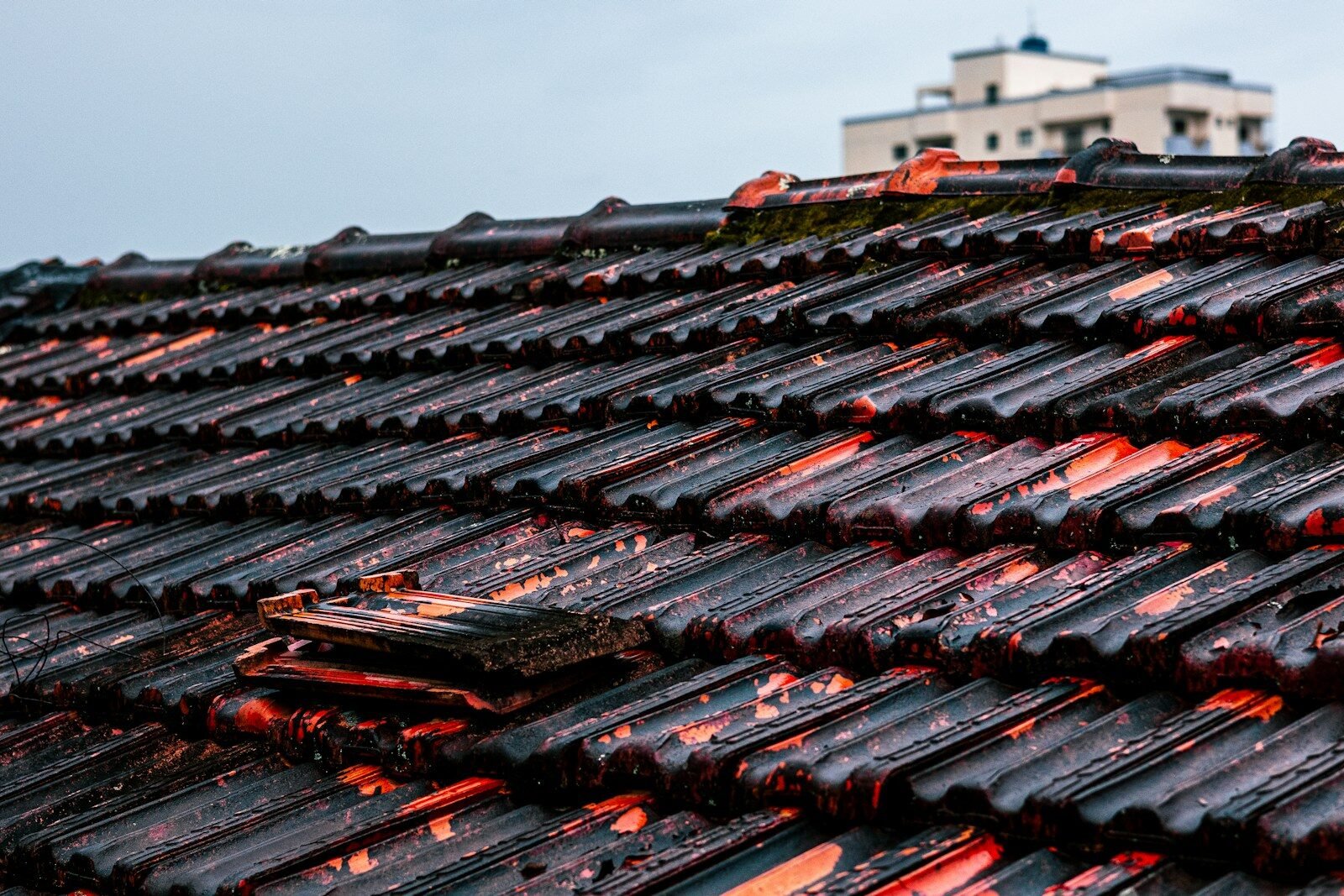
When underlayment fails (which happens more often in our climate), water reaches plywood or OSB decking that wasn’t designed for direct exposure. PNW decking damage we find during tear-offs is consistently more severe than national averages suggest.
Tile underlayment
As we cover in detail on our tile roof repair page, the underlayment beneath tile fails first in our climate, often before the tile shows any visible problem. Missing anti-ponding metal at the eaves accelerates this dramatically.
2. Biological attack from three different organisms
Most “moss-prone” climates deal with one biological roof attacker. The Pacific Northwest has three, all attacking simultaneously:
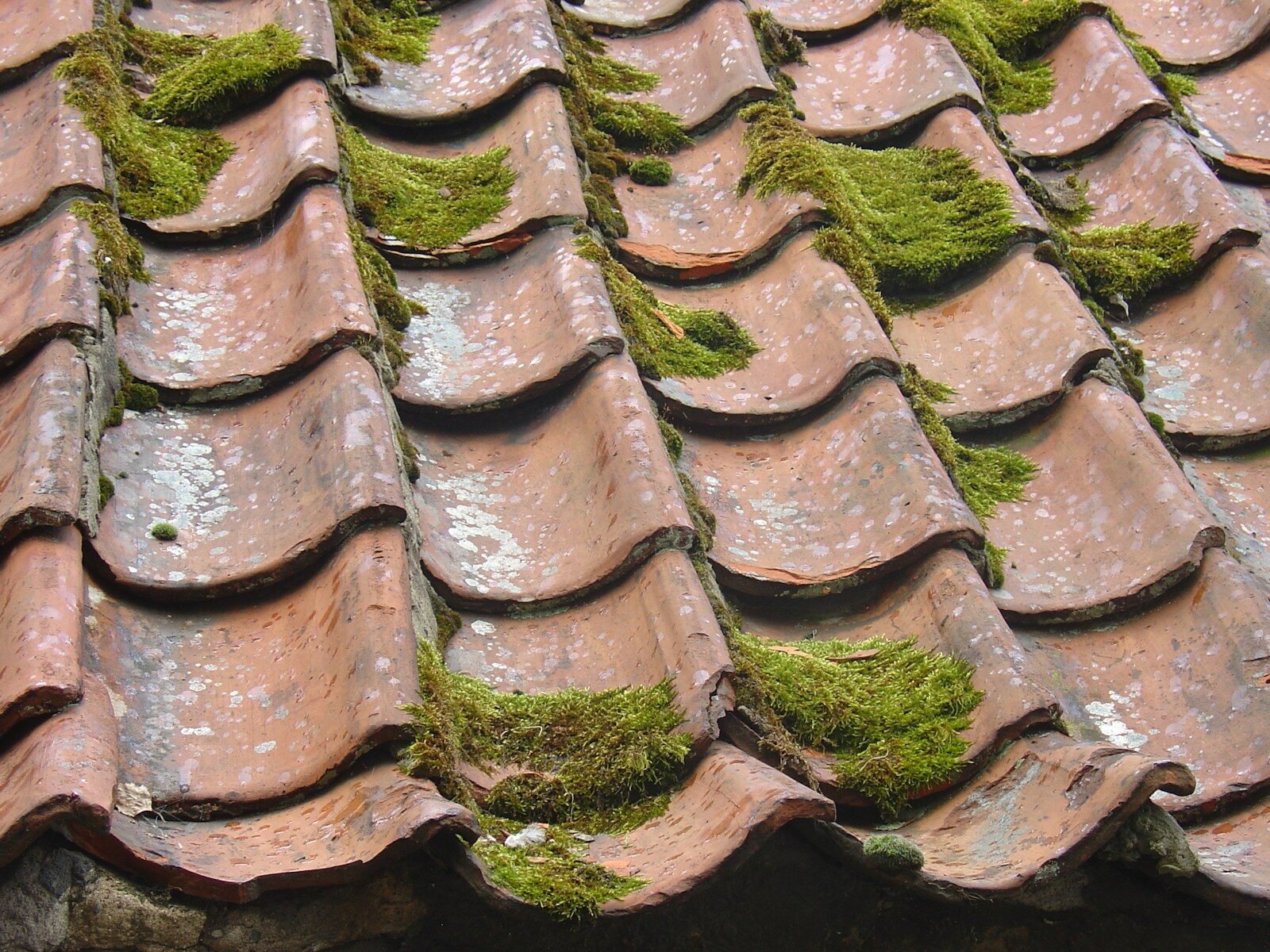
Moss
Moss is the most visible and widely understood. It thrives in shaded, damp conditions, retains 20+ times its weight in water, lifts shingles, and creates micro-environments where decay accelerates. PNW moss is also more aggressive than moss in most other climates — milder temperatures mean it grows year-round rather than seasonally, and the constant moisture supports continuous expansion.
Algae
Algae (specifically Gloeocapsa magma) creates the dark streaking visible on north-facing slopes before moss is established. Algae itself doesn’t structurally damage shingles, but its presence indicates conditions ideal for moss colonization within 1-3 years, and the streaking is unsightly enough that it affects resale value.
Lichen
Lichen is the toughest of the three to remove and the most damaging once established. Lichen is technically a symbiotic relationship between fungus and algae, and it bonds tightly to roofing materials in ways that physical removal can’t address without damaging the underlying surface. Lichen patches on PNW roofs typically indicate moisture and shade conditions that favor all three organisms.
The combination matters because removing one without addressing the conditions that support all three only delays regrowth. Effective long-term moss/algae/lichen control in our climate requires zinc or copper strips at the ridge (which release ions that inhibit all three), regular professional treatment, debris clearing, and tree management — not one-time cleanings.
We cover the specific damage mechanisms and treatment realities in detail on our roof moss page.
3. Tree debris loading from PNW species
Three tree species drive most of the debris-related roof damage in the Portland metro, and each does it differently:
Douglas fir
Douglas fir sheds needles continuously throughout the year, with major shed events in late summer and after wind storms. Doug fir needles are small, dense, and fall in massive quantities — a single mature Doug fir near a house can drop pounds of needles per shed cycle. The needles wedge into shingle gaps, accumulate in valleys, fill gutters, and hold moisture against the roof surface for extended periods. Acidic compounds in needle decay also contribute to surface degradation.
Big-leaf maple
Big-leaf maple drops larger leaves that don’t wedge into shingle gaps the same way Doug fir needles do, but mat together in valleys and gutter sections, creating water-flow obstructions that direct rainfall under shingles instead of through proper drainage paths. Wet leaf mats also hold moisture against roof surfaces for days.
Oaks
Oaks drop acorns, leaves, and small branch debris with seasonal patterns that favor late fall through winter — exactly when PNW roofs are also dealing with peak rainfall. Oak debris is particularly problematic because acorns can damage shingles by mechanical impact when they fall from height, and oak leaves contain tannic acid compounds that contribute to surface staining and degradation when wet leaves sit against roofing materials.
The combined effect: roofs in heavily-treed PNW neighborhoods accumulate debris faster than they can be cleaned, debris holds moisture against the roof surface, water flow gets diverted from designed drainage paths, and the roofing materials underneath fail years faster than they would on a sunny, debris-free lot.
The neighborhoods where we see this most acutely:
- Lake Oswego — extensive Doug fir and big-leaf maple coverage on lots originally selected for the trees
- Southwest Portland — heavily treed with all three species
- Cedar Mill, Cedar Hills, Bethany — substantial tree coverage particularly on north-facing lots
- West Linn — heavily wooded with mixed species
- Happy Valley — significant tree coverage on older established lots
For homeowners in these areas: regular professional cleaning isn’t optional. Roofs with heavy tree coverage need brushing, blowing, or cleaning every year — minimum. North-facing slopes need extra attention.
4. Ventilation failures (the biggest one nobody sees)
This is the single most common cause of premature PNW roof failure, and it’s almost always invisible to homeowners until the damage is done. Most roofs in our market don’t have enough intake ventilation.
Here’s what proper roof ventilation does: cool outside air enters the attic through soffit vents at the eaves, warm/moist air exits through ridge vents or other exhaust at the peak. The continuous airflow keeps the attic temperature reasonable, prevents moisture buildup, and protects the roofing materials from being baked from below in summer or saturated from below in winter.
Here’s what happens without proper ventilation:
Summer
Attic temperatures climb to 140-160°F. Asphalt shingles get cooked from below, accelerating granule loss and softening the asphalt to the point where they curl, cup, or fail prematurely. Cedar dries out and cracks. Underlayment degrades faster than it would with normal airflow.
Winter
Warm interior air carries moisture into the attic. Without exhaust ventilation, that moisture condenses on the cold roof deck. Decking absorbs moisture, mold begins growing, and over years the entire roofing system suffers. On metal roofs, the condensation drips visibly from the panel undersides — homeowners see “leaks” that aren’t from rain at all.
Year-round
The warm peak of the roof in winter, combined with cool eaves, creates the temperature differential that drives ice dam formation during freeze events.
The ventilation analogy we use with homeowners: imagine your front door is open but your back door is closed. You don’t feel much airflow even though you’ve got an opening. Now open the back door — air moves through the house. Roof ventilation works the same way. Intake at the eaves and exhaust at the ridge need to work together. Either one alone doesn’t do the job.
Most PNW homes built before the 2000s have inadequate intake ventilation by current standards. Many builds from the 80s and 90s have only box vents at the peak (which actually short-circuit airflow when combined with ridge vents). New construction in the past 15 years is generally better but not consistently so — we get repair calls on roofs 1-3 years old in newer Beaverton, Bethany, Cedar Mill, and Happy Valley neighborhoods where ventilation was undersized despite current code.
When we install or replace a roof, we won’t offer a long workmanship warranty on a roof we can’t ventilate properly. We want the roof system to actually last, and a roof without adequate ventilation can’t.
5. Freeze-thaw and elevation effects
PNW winter weather isn’t extreme by Northeast or Midwest standards, but it cycles. The Portland metro typically gets 5-10 freeze events per winter that include thaw periods within 24-48 hours. That cycling is harder on roofing materials than sustained cold because each cycle creates expansion and contraction stress on:
- Fasteners (which can back out over years)
- Sealant joints (which can crack)
- Flashing (which can shift)
- Tile (which can crack along stress lines)
- Cedar shake fasteners (significant fastener loosening from thermal cycling is one of the cedar failure modes we see most often)
Elevation matters because the PNW has substantial elevation variation across the metro. Homes in Skyline, Cooper Mountain, Northwest Portland, and parts of the West Hills experience more freeze events, more wind, and more weather variability than homes in valley locations. We see consistent patterns: hilltop and ridge-line homes have shorter roof lives than valley homes, all else equal.
We also see specific damage patterns from peak weather events. The January 2024 ice storm created widespread issues across the Portland metro:
- Ice dams formed on hundreds of homes, almost always on roofs with inadequate ventilation. The peak of the roof was warmer than the eaves, snow melted at the peak, water ran down to the cold eaves and refroze, ice dams built up, and water backed up under the shingles.
- Thousands of homes suffered tree limb damage from ice-laden branches breaking under the weight.
- Roofs on heavily-treed lots faced multiple impact events as debris fell during the thaw period.
The ice storm pattern is repeating: same neighborhoods, same ventilation issues, same trees. Homeowners with well-ventilated roofs in 2024 had dramatically less ice dam damage than those without — direct evidence that ventilation is the most important variable in winter PNW roof performance.
Wind events and atmospheric rivers
PNW wind events deserve their own discussion because the damage patterns are specific and predictable.
Coastal homes, Columbia River Gorge homes, large hill locations (Skyline, Cooper Mountain, Northwest Portland) experience occasional but significant wind events that drive roof failures. Standard 3-tab shingles often fail at lower wind speeds than architectural shingles. Older shingles (15+ years) lose their seal-strip integrity and become vulnerable to even moderate wind.
For homes in these wind-exposed zones, we typically recommend:
- Heavier roofing products — architectural rather than 3-tab, premium GAF lines with high-performance seal strips
- Metal roofing as a primary recommendation in extreme exposure zones
- Wind-rated installations with extra fastening at perimeters and rakes
If you’re missing shingles after a high-wind event, that’s almost always insurance-covered. Document immediately, file the claim, and have a roofer assess. The repair-vs-replacement decision in those cases gets reframed by what insurance covers, and Aaron’s adjuster background helps document storm damage in the format that gets claims approved.
Atmospheric river events — multi-day high-volume rain events that have become more common in recent years — drive a different damage pattern. They overwhelm gutter systems, expose any inadequate flashing or underlayment, and accelerate moss growth in the weeks following because of saturated conditions across the entire roof.
What about hail?
Genuinely good news: severe hail is rare in our climate. We do see some hail damage occasionally, but the kind of hail-driven roof replacement that’s common in Texas, Colorado, or the Midwest isn’t a primary failure mode for PNW roofs. When we do see hail damage, it’s usually localized and falls under standard insurance claim handling.
This is one area where PNW roofs perform better than national averages — most shingle and metal roof products are over-spec’d for hail resistance compared to what they actually face here.
Specific neighborhood patterns
Bethany, Beaverton, Cedar Mill, Happy Valley
Substantial new construction in the past 10-15 years, and a surprising number of repair calls on roofs 1 to 3 years old. The issues we find are consistent: cracked plastic vent components, poor workmanship from rushed builder-grade installation, ventilation that wasn’t properly addressed during construction. New construction defects are real and underreported.
Lake Oswego, West Linn, Southwest Portland
Heavily treed lots with extensive Doug fir and big-leaf maple coverage. Tile and cedar are common in these neighborhoods, and both struggle in the combined conditions of heavy tree debris, deep shade, and constant moisture. Tile roofs in these areas frequently show the missing-anti-ponding-metal failure pattern that we cover in detail elsewhere.
Skyline, Cooper Mountain, Northwest Portland
Elevated locations with greater wind exposure, more freeze-thaw cycling, and more severe weather variability. We recommend heavier roofing products, premium wind-rated installations, and metal roofing as a strong option for these locations.
Cedar Hills, Raleigh Hills, West Slope
Older established neighborhoods, mix of cedar and asphalt roofs, significant tree coverage particularly on north-facing lots. Moss is the dominant ongoing maintenance issue. Annual cleaning is the right baseline for these areas.
Hillsboro, Tigard, Aloha, Tualatin, Sherwood, Wilsonville
Generally less heavily treed than the West Hills neighborhoods, more open lots, less aggressive moss issues but still requiring regular maintenance. Standard architectural composition shingles perform well in these areas with proper ventilation.
What homeowners can actually do
Understanding the failure modes is useful only if it leads to better decisions. Here’s what we’d recommend for any PNW homeowner:
For your existing roof:
- Get an inspection if your roof is over 15 years old. Free from us, paid from a commercial inspector — either way, get an honest assessment of where you actually are.
- Address ventilation if it’s inadequate. This is the single highest-impact change you can make to extend the life of an existing roof. If we’re inspecting, we’ll specifically tell you whether your ventilation is working.
- Manage tree debris aggressively. Annual professional cleaning, gutter clearing, branch trimming where it makes sense. Roofs in heavily-treed areas need this.
- Address moss before it’s severe. Stage 1 (algae streaking) and Stage 2 (light moss) are inexpensive to manage. Stage 3+ is expensive and may already be damaging shingles.
- Don’t pressure wash. This is the most common DIY mistake and it can destroy years of remaining roof life in a single afternoon.
For your next roof:
- Choose materials matched to your specific lot conditions. Heavily-treed lot with lots of moss potential? Architectural composition with algae-resistant granules (GAF Timberline HDZ, CertainTeed Landmark with StreakFighter) or metal. Sunny lot with good airflow? Most material options work well. Wind-exposed elevated location? Metal or premium architectural with high-performance seal strips.
- Insist on proper ventilation. This is non-negotiable for a long-lasting PNW roof. The contractor should specifically discuss intake (soffit) and exhaust (ridge) ventilation as part of the project scope.
- Insist on the full system. Synthetic underlayment, ice-and-water shield in valleys and around penetrations, proper drip edge, factory-engineered ridge cap (not cut shingles), proper flashing. If a quote is significantly cheaper, it’s almost always cheaper because something on this list got skipped. We cover this in detail on our why quotes vary page.
- Plan for ongoing maintenance. Even the best roof in this climate benefits from regular cleaning, moss management, and gutter maintenance. Build that into your homeownership budget.
Frequently Asked Questions
Why do Pacific Northwest roofs fail earlier than the manufacturer says they should?
Five compounding factors: continuous moisture saturation without proper dry-out cycles, biological attack from moss/algae/lichen growing year-round, heavy tree debris from Doug fir/oak/maple species, ventilation failures that cook shingles from below, and freeze-thaw cycling on elevated terrain. Most manufacturer lifespan testing happens in milder climates than ours, so real-world PNW performance often runs 15-30% below stated estimates.
Why is moss such a serious problem on PNW roofs specifically?
Three different organisms (moss, algae, lichen) all thrive in our climate’s combination of mild temperatures, sustained moisture, heavy tree cover, and 150+ overcast days per year. Moss alone can shorten an asphalt roof’s life by 5-15 years through mechanical damage (lifting shingles), moisture retention, granule loss, and creating environments for further degradation.
Why is roof ventilation such a big deal in the Pacific Northwest?
Without proper intake and exhaust ventilation, summer attic temperatures bake shingles from below (140-160°F is common), winter moisture condenses on cold roof decks creating decay and mold, and ice dams form from temperature differentials between roof peaks and eaves. Most PNW homes built before 2000 have inadequate intake ventilation. This is the single most common cause of premature roof failure in our market.
What trees cause the most roof damage in the Portland metro?
Three species drive most debris-related damage: Douglas fir (continuous needle shedding, especially after wind events), big-leaf maple (large leaves that mat in valleys and divert water), and oaks (acorns plus tannic acid in wet leaves). Properties with multiple of these species require aggressive ongoing roof maintenance.
Should I worry about hail damage in Portland?
Genuinely no, in most cases. Severe hail is rare in our climate compared to Texas, Colorado, or the Midwest. We see occasional hail damage but it’s a minor failure mode for PNW roofs. Most shingle and metal roof products are over-engineered for hail resistance compared to what we actually experience.
What was the impact of the January 2024 ice storm?
The ice storm created widespread ice dam damage on homes with inadequate ventilation (the peak warmed, melted snow ran to cold eaves, refroze and built up), significant tree limb damage from ice-laden branches breaking, and impact damage from falling debris during the thaw period. Homes with proper ventilation had dramatically less ice dam damage — direct evidence of why ventilation matters.
What’s the single best thing I can do to extend my PNW roof’s life?
Address ventilation. Inadequate ventilation is the most common premature-failure factor in our market, and it’s also the most fixable. Proper intake at the eaves combined with proper exhaust at the ridge transforms how a roof handles both summer heat and winter moisture. We won’t offer long workmanship warranties on roofs we can’t ventilate properly.
Why do roofs in newer neighborhoods like Bethany and Cedar Mill have so many problems?
Substantial new construction in the past 10-15 years in those areas has produced a surprising number of repair calls on 1-3 year old roofs. The issues we find are consistent: cracked plastic vent components, rushed builder-grade workmanship, and ventilation that wasn’t properly addressed during construction. New roofs shouldn’t need repairs in their second year; when they do, the cause is almost always installation rather than material defect.
What roofing materials work best in the PNW?
For most homeowners: architectural composition shingles with algae-resistant granules (GAF Timberline HDZ, CertainTeed Landmark Pro). For homes staying long-term and wanting maximum lifespan: standing seam metal. For homes in heavily-treed lots: metal handles debris better than asphalt. For homes architecturally suited to it and homeowners committed to maintenance: composite synthetic shake or slate. Real cedar and tile both have significant additional considerations in our climate that we cover on dedicated pages.
How often should I have my roof professionally cleaned?
Roofs with heavy tree coverage need cleaning every year — minimum. Roofs in moderate tree coverage need cleaning every 2-3 years. Roofs on sunny lots with limited tree coverage can stretch to every 3-4 years. North-facing slopes need extra attention regardless of overall lot conditions.
Why do you say PNW moss is different from moss elsewhere?
PNW moss grows year-round rather than seasonally because of mild winters that don’t kill it, expands continuously rather than in growth cycles, and is part of a three-organism system (moss + algae + lichen) that other climates don’t have to deal with simultaneously. Treatment that works in single-organism climates often doesn’t address PNW conditions adequately.
Get a PNW-Specific Roof Assessment
Every roof in our climate has its own pattern of stresses based on lot conditions, tree coverage, ventilation, age, and material. A free Raven Roofing inspection covers all of the failure modes discussed in this article — moss conditions, ventilation adequacy, debris loading patterns, freeze-thaw exposure, and material-specific concerns — with photo documentation of what we find.
📞 Call 503-783-8855 or request a free inspection online.
Raven Roofing Beaverton LLC
4145 SW Watson Ave #350, Beaverton, OR 97005
Oregon CCB #257909 | GAF Certified Plus | CertainTeed Shingle Master | BBB Accredited
Serving Beaverton, Hillsboro, Tigard, Aloha, Lake Oswego, West Linn, Tualatin, Sherwood, and the greater Portland metro.