Tile Roof Repairs in the Portland Metro: Anti-Ponding, Valley Failures, and What Comprehensive Repair Actually Costs
By Aaron Cope, Owner, Raven Roofing Beaverton — Last updated May 2026
TL;DR: Tile roof repairs in the Portland metro almost always run into thousands of dollars because the materials are heavy and labor-intensive, replacement tiles are frequently discontinued and difficult to match, and most tile leaks come from underlying installation issues — missing anti-ponding metal at the eaves and improper valley flashing — that can’t be fixed without lifting and reinstalling significant sections of tile. Simple tile repairs (broken tiles where matching tiles are available) start around $1,500 to $4,000. Comprehensive repairs that involve installing anti-ponding metal around the perimeter or rebuilding valleys typically run $8,000 and up — and we’ve completed tile repair projects in the $20,000 to $30,000 range on larger homes. This page explains why tile repair costs what it costs, the specific PNW failures we see most often, and how to think about repair versus conversion for an aging tile roof.
Why choose us for tile repairs
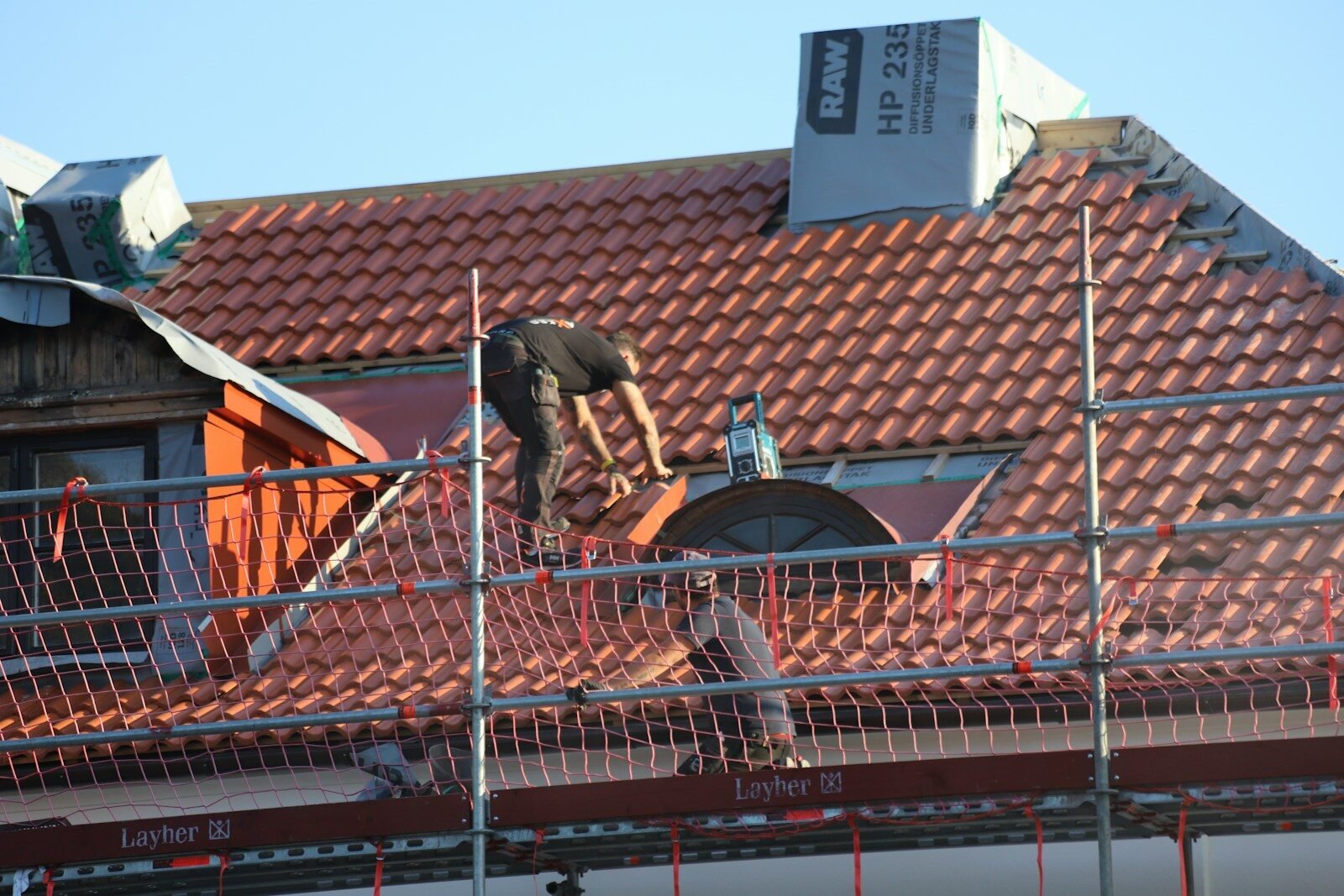
Tile is specialty work that fewer and fewer Portland-area contractors handle properly. The skill is becoming a lost art in this market — newer roofers haven’t trained on it, older specialists are aging out, and most companies redirect tile inquiries toward replacement quotes because repair is harder to scope and harder to execute.
Raven Roofing handles tile repair work because Josh brings 16 years of multi-system roofing experience including extensive tile installation and project management. He runs production and makes the technical calls on-site — and on tile, those calls are more complex than almost any other material. Aaron Cope handles the estimate, the communication, and the inspection documentation: his background as a former roofing insurance adjuster means diagnosing what’s actually wrong under intact-looking tiles gets done methodically, not guessed at from the driveway.
Our credentials — Oregon CCB #257909, GAF Certified Plus, CertainTeed Shingle Master, BBB Accredited — are the standard credentials. The reason to call us specifically for tile work is the experience.
What does it cost to repair a tile roof in Portland?
Tile repairs are categorically more expensive than asphalt or even cedar repairs because of three realities: tile is heavy and labor-intensive to remove and reinstall, materials are often discontinued and require sourcing time, and most “small” tile problems are actually symptoms of a larger underlying installation issue that requires comprehensive work to resolve.
Short tile repairs ($400 – $1,800 / $700+ for a half-day)
Genuinely simple tile repairs — when they exist — cover work like:
- Reseating loose ridge or hip tiles on a small section
- Replacing 5 to 10 broken tiles where matching tiles are available
- Localized flashing repair on a small chimney or vent
- A short half-day of work for one or two installers
Full-day tile repairs ($1,800 – $4,000)
A full day of tile work — one to three installers — covers:
- Larger ridge or hip tile reset across the full ridge or hip line
- Mid-scale broken tile replacement (assuming tiles can be sourced or reused)
- Valley repair where the underlayment is still partially intact
- Comprehensive flashing repair at chimneys or skylights with surrounding tile work
Multi-day tile repairs ($4,000 – $12,000)
- Full valley reconstruction including underlayment replacement under tile
- Anti-ponding metal installation along significant perimeter sections
- Comprehensive tile and underlayment repair on a section of the roof
Major tile repair projects ($8,000 – $30,000+)
On larger homes with widespread issues — anti-ponding metal needed around the full perimeter, multiple failed valleys, broken tiles throughout, leaking underlayment in several areas — comprehensive tile repair becomes a 5 to 10 day project for multiple crew members. We’ve completed tile repair projects in the $20,000 to $30,000 range, and these are routine on larger homes in Lake Oswego, West Linn, and the West Hills where tile was used heavily on bigger floor plans during the 80s and 90s housing boom.
The reason these jobs scale up: anti-ponding metal isn’t a quick add-on. To install it correctly, you have to pull off three courses of tile along the eaves, stack them carefully on the ground without breaking them, install the metal, then reinstall the tiles. On a home with several thousand linear feet of perimeter, that’s 2 to 4 days of careful work — minimum.
What is anti-ponding metal, and why does it matter so much?
Anti-ponding metal is the single most important detail on a tile roof in the Pacific Northwest, and most tile roofs we inspect in the Portland metro don’t have it. This is a local installation issue, mostly from a lack of knowledge among the original roofers who installed tile during the 80s and 90s housing boom in this market.
Here’s what’s happening physically:
Tile roofs in our area are typically installed with raised fascia — meaning the fascia board at the edge of the roof is built up higher than it would be on an asphalt roof. The reason for the raised fascia is that tile sits on top of battens (horizontal wood strips) on top of underlayment, which raises the height of the tile above the roof deck. To keep the tile on the same plane as the rest of the roof structure, the fascia has to be installed higher.
The problem: that raised fascia acts as a dam. When water gets under the tile — which happens regularly in a 36-inch-rainfall climate — the water hits the raised fascia and has nowhere to drain. It pools behind the fascia, sits against the underlayment, and over years it rots out the underlayment along the entire eave.
Anti-ponding metal solves this. It’s a piece of metal flashing installed at the eave that allows water trapped under the tile to drain over the fascia and off the roof properly, instead of pooling against it. With anti-ponding metal correctly installed, your tile roof’s underlayment lasts 30+ years. Without it, your underlayment fails at the perimeter starting around 20 years of age, and you start seeing leaks at the eaves with no obvious external cause.
We see leaking and rotting tile roof underlayment from missing anti-ponding metal across the Portland metro constantly — especially in heavily-treed areas like Lake Oswego, southwest Portland, and parts of the West Hills where tile roofs were popular and where tree debris compounds the moisture problem.
Why are tile roof valleys such a frequent failure point?
Valleys — where two roof slopes meet — are the second major failure pattern on Portland-area tile roofs. The mechanism here is similar to the eave problem but happens in the middle of the roof.
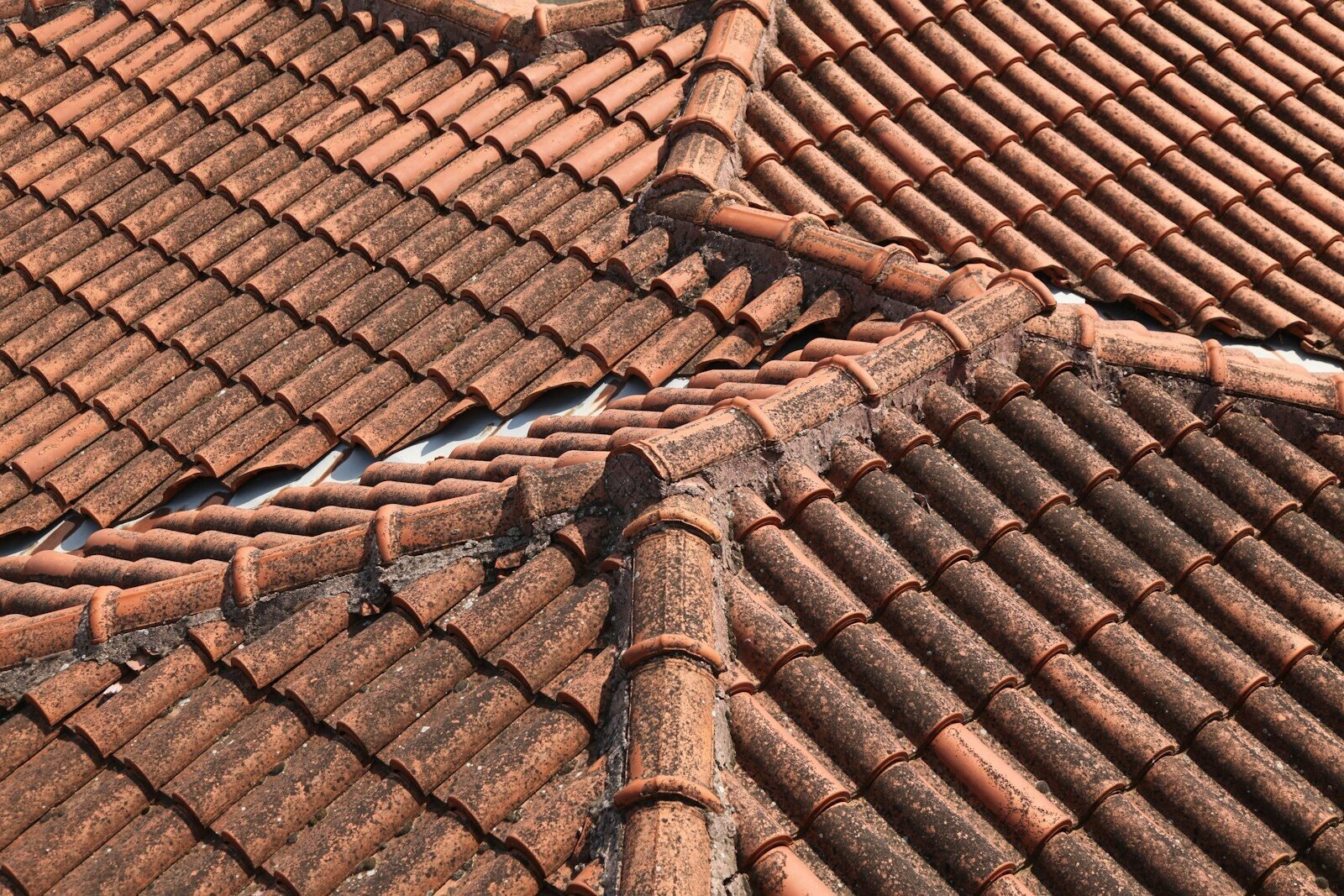
When the original installation used metal valley flashing that runs over the top of the tile (rather than properly woven under and through), debris collects in the valley over years. Pine needles, leaves, organic matter — all of it builds up in the valley, holds moisture, and gradually shifts water flow under the surrounding tiles instead of through the valley.
Once water is flowing under the tiles instead of through the valley, it lands directly on the underlayment. The underlayment was never designed for that kind of water exposure, fails within a few years, and you start seeing leaks in the valley area with no obvious external damage.
To repair this properly: pull the tile back from the valley, replace the failed underlayment, install or replace the valley flashing correctly with proper integration into the surrounding tile, and reinstall the tile. It’s labor-intensive work, and it’s why valley repair on tile roofs costs significantly more than valley repair on shingle roofs.
The discontinued tile reality
Most tile roofs in the Portland metro that are 10+ years old have one or more of these problems with replacement tile sourcing:
Discontinued manufacturers.
The big tile manufacturers active in this market during the 80s and 90s — Monier, Lifetile, Spectile, Bartile, Bantile (also known as Permaroof), Adams Powell (also known as NW Shake Tile), and others — have either discontinued specific products, been acquired and consolidated, or exited the residential tile market entirely. The tile manufacturing industry has been through significant mergers and consolidation, and with each merger, more product lines disappear from active production.
Color and profile mismatches.
Even when a manufacturer still exists, the specific color and profile your roof was installed with often isn’t made anymore. Substitute tiles look different from the originals, and on a visible roof, that visual mismatch drives most homeowners crazy.
Limited salvage availability.
Some replacement tiles can be salvaged from demolition projects, but the supply is unreliable and never something you can plan a repair around. We do source salvage when possible, but most tile owners eventually face a roof where the original product line is genuinely unobtainable.
This is the single biggest practical issue with maintaining older tile roofs in the Portland metro, and it’s why so many tile owners eventually convert to a different material rather than continuing to chase repairs on an unreplaceable product.
Why most tile owners eventually convert
Across the tile repair work we do in the Portland metro, most tile owners we work with eventually convert to a different roofing material because the combination of:
- High maintenance and repair costs
- Broken tiles accumulating over time (foot traffic during repairs breaks tiles every visit)
- Missing or undersized anti-ponding metal causing perimeter underlayment failure
- Valleys collecting debris and shifting water flow under tiles
- Discontinued tile lines making matching repairs impossible
…adds up to a roof system that costs more to keep alive than to replace with something better suited to PNW conditions. We cover this in detail on our tile roofing in the PNW guide, but the short version: for most homeowners with aging tile roofs, conversion to architectural composition shingle ($15,000-$25,000) or composite synthetic slate ($22,000-$40,000) is the smarter long-term decision than continuing to repair a system that’s fighting our climate.
The repair vs. re-roof framework for tile owners
The math for tile repair vs. conversion follows the same per-year cost framework we use across all roofing decisions, but tile has a unique consideration: tile repair life is genuinely hard to predict because every visit to the roof breaks more tiles, and every gust of wind reveals which substitute tiles are matched and which aren’t.
- Estimate how long the proposed tile repair will reasonably extend the roof’s useful life. Be conservative — tile repair life is harder to predict than shingle repair life.
- Divide repair cost by that number of years to get cost per year.
- Divide replacement/conversion cost by expected new roof lifespan.
- Compare.
A worked example: A comprehensive tile repair with anti-ponding metal installation runs $15,000 and we expect it to give you 8-10 more years before the next significant issue (assuming valleys, decking, and the rest of the underlayment hold up). At 9 years, that’s $1,667 per year. A conversion to architectural composition costs $20,000 and lasts 30 years — that’s $667 per year. Or a conversion to composite slate costs $32,000 and lasts 50 years — $640 per year.
In most tile cases on roofs over 25 years old, the per-year math favors conversion. We show this math both ways and let the homeowner decide.
There are still cases where tile repair makes sense:
- Architecturally significant home where tile is genuinely required (Mediterranean, Spanish Colonial, certain Mission-style architecture)
- Recently installed tile (under 15 years old) with isolated problems
- Tile homeowner committed to long-term ownership and accepting of the higher maintenance cost
- Cases where matching replacement tiles can be reliably sourced
What tile repair work includes from Raven
When we do tile repair work, we include:
- Comprehensive inspection with photo documentation of every issue found, including underlayment condition lifted from sample areas
- Honest assessment of whether repair makes sense vs. starting the conversion conversation
- Anti-ponding metal evaluation — we’ll specifically tell you whether it’s installed correctly on your roof, because this single detail predicts more about your tile roof’s future than almost any other variable
- Moss powder treatment in affected areas to slow regrowth
- Mastic over exposed nails found during work
- Gutter cleanout where debris is contributing to the issues
- Tile replacement match attempts — we’ll work to source matching tiles from active production, salvage suppliers, and sometimes discontinued-tile networks before recommending non-matching substitutes
- Photo documentation of completed work
Frequently Asked Questions
How much does tile roof repair cost in the Portland metro?
Simple tile repairs start at $400-$1,800 for short jobs. Most tile repair work falls in the $1,800-$8,000 range for full-day to multi-day work. Comprehensive tile repair projects involving anti-ponding metal installation, valley reconstruction, and underlayment work commonly run $8,000-$20,000, and on larger homes can reach $30,000.
What is anti-ponding metal and why does my tile roof need it?
Tile roofs use a raised fascia board because the tile sits on battens above the roof deck. That raised fascia acts as a dam — when water gets under the tile, which happens regularly in our climate, the water pools against the fascia and sits on the underlayment until it rots through. Anti-ponding metal is a piece of flashing installed at the eave that lets that trapped water drain over the fascia properly. Most tile roofs in the Portland metro from the 80s and 90s don’t have it because of a local installation knowledge gap, and we see the resulting underlayment failure constantly.
Why are valleys such a common failure point on tile roofs?
When valley flashing runs over the top of tiles instead of being properly integrated, debris (pine needles, leaves, organic matter) collects in the valley over years, holds moisture, and gradually shifts water flow under the surrounding tiles. Once water is running under the tiles, it lands on underlayment that wasn’t designed for that exposure, and the underlayment fails. Repair requires pulling tiles back from the valley, replacing failed underlayment, installing the valley correctly, and reinstalling the tile.
Why are replacement tiles so hard to find?
Most tile manufacturers active in the Portland market in the 80s and 90s — Monier, Lifetile, Spectile, Bartile, Bantile (Permaroof), Adams Powell (NW Shake Tile), and others — have discontinued specific products, been acquired, or exited the residential tile market through industry-wide mergers and consolidation. Color and profile matches that were standard 30 years ago often have no current equivalent. Salvage tiles are sometimes available but inconsistent.
Should I repair my old tile roof or convert to a different material?
For most Portland-area tile owners with roofs over 25 years old, conversion to architectural composition or composite synthetic slate is the smarter long-term decision than continuing to repair a system that’s fighting our climate. Run the per-year math both ways: divide repair cost by expected remaining life, then compare to replacement cost divided by new roof lifespan. Tile repair life is genuinely hard to predict, so be conservative on that estimate.
Why is tile repair so labor-intensive?
Tile is heavy, fragile, and has to be removed and reinstalled to access the underlayment beneath it. Anti-ponding metal installation requires pulling off three courses of tile along the eave, stacking them carefully without breaking them, installing the metal, and reinstalling. Multiply that across hundreds of linear feet of perimeter and you have multiple days of careful work just for one detail. Every visit to the roof also breaks more tiles, which has to be factored into the scope.
What kinds of tile do you see most often in the Portland metro?
Concrete tile is by far the most common, especially in 80s and 90s housing in Lake Oswego, West Linn, parts of southwest Portland, and certain Beaverton subdivisions. Clay tile shows up on higher-end Mediterranean-style homes in Lake Oswego, Dunthorpe, and the West Hills. Lightweight composite “tile look” products are different systems with different repair characteristics.
Can I walk on my tile roof to clean it or check on something?
Strongly advised against. Even careful foot traffic cracks concrete tiles in ways that may not show damage immediately but cause leaks years later. Hire a roofer or maintenance contractor experienced specifically in tile work — they know how to distribute weight and place feet on the supported portions of each tile.
Will my insurance cover tile roof problems?
Sudden damage (storm, fallen tree, hail) is generally covered. Underlayment failure due to age and missing anti-ponding metal is wear and tear, not a covered event. Most tile roof problems we see in the Portland metro fall into the wear-and-tear category. Document any sudden damage events thoroughly and immediately, and have us provide a professional assessment for your adjuster.
Do you do conversions from tile to another material?
Yes, regularly. Tile-to-architectural-composition conversion runs $15,000-$25,000. Tile-to-composite-slate runs $22,000-$40,000. Tile-to-standing-seam-metal runs $25,000-$40,000. We’ll walk through the per-year math and the aesthetic considerations for each option during the inspection.
How long does tile repair work take?
Short repairs are a half-day to a full day. Full-day repairs are exactly that — a single working day with one to three installers. Multi-day repairs run 2-4 days. Comprehensive tile projects including anti-ponding metal around the perimeter typically run 5-10 days from start to cleanup.
Get a Real Tile Roof Inspection
If you have a tile roof in the Portland metro that’s giving you problems — or you just want an honest assessment of whether anti-ponding metal is installed correctly and what condition the underlayment is in — we’d rather come look than guess from the driveway. Free inspections include lifting tiles in sample areas to evaluate the underlayment, photo documentation of every issue, an honest assessment of repair vs. conversion options, and a written quote you can compare to anything else.
📞 Call 503-783-8855 or request a free inspection online.
Raven Roofing Beaverton LLC
4145 SW Watson Ave #350, Beaverton, OR 97005
Oregon CCB #257909 | GAF Certified Plus | CertainTeed Shingle Master | BBB Accredited
Serving Beaverton, Hillsboro, Tigard, Aloha, Lake Oswego, West Linn, Tualatin, Sherwood, and the greater Portland metro.