Tile Roofing in the Pacific Northwest: Why It’s Often the Wrong Choice for Portland Homes
By Aaron Cope, Owner, Raven Roofing Beaverton — Last updated May 2026
Quick answer: Concrete and clay tile roofs were popular in Portland-area construction during the 1980s and 1990s, but tile is engineered for arid climates — Spain, Arizona, Southern California — not the Pacific Northwest. In our climate, the tiles themselves often outlast the underlayment beneath them by decades, replacement tiles for repair work are frequently impossible to source after manufacturers discontinue lines, and the structural weight of tile creates problems that don’t exist with lighter materials. If you have a tile roof in Beaverton or the Portland metro that’s 25+ years old and starting to give you trouble, the honest answer is usually: convert to architectural composition or composite slate rather than replacing with tile.
This is the page nobody else wants to write because most Portland roofers will happily quote you a tile replacement. We won’t, and here’s why.

What kinds of tile roofs are common in the Portland area?
The vast majority of tile roofs you see in Beaverton, Tigard, Lake Oswego, and the Portland metro fall into one of three categories:
- Concrete tile (most common) — Mid-weight concrete tiles, typically with simulated barrel or flat profiles. Heavy installations from the 1980s and early 1990s housing boom. Brands like Monier (now Boral), Westile, and Lifetile dominated.
- Clay tile (less common) — True terra cotta and Spanish-style barrel tiles. More common on higher-end homes and Mediterranean-style architecture in West Linn, Lake Oswego, and parts of the West Hills.
- Composite/lightweight “tile look” — Stone-coated steel and synthetic alternatives that mimic tile aesthetics. These are different products entirely and don’t have the issues we’re about to discuss.
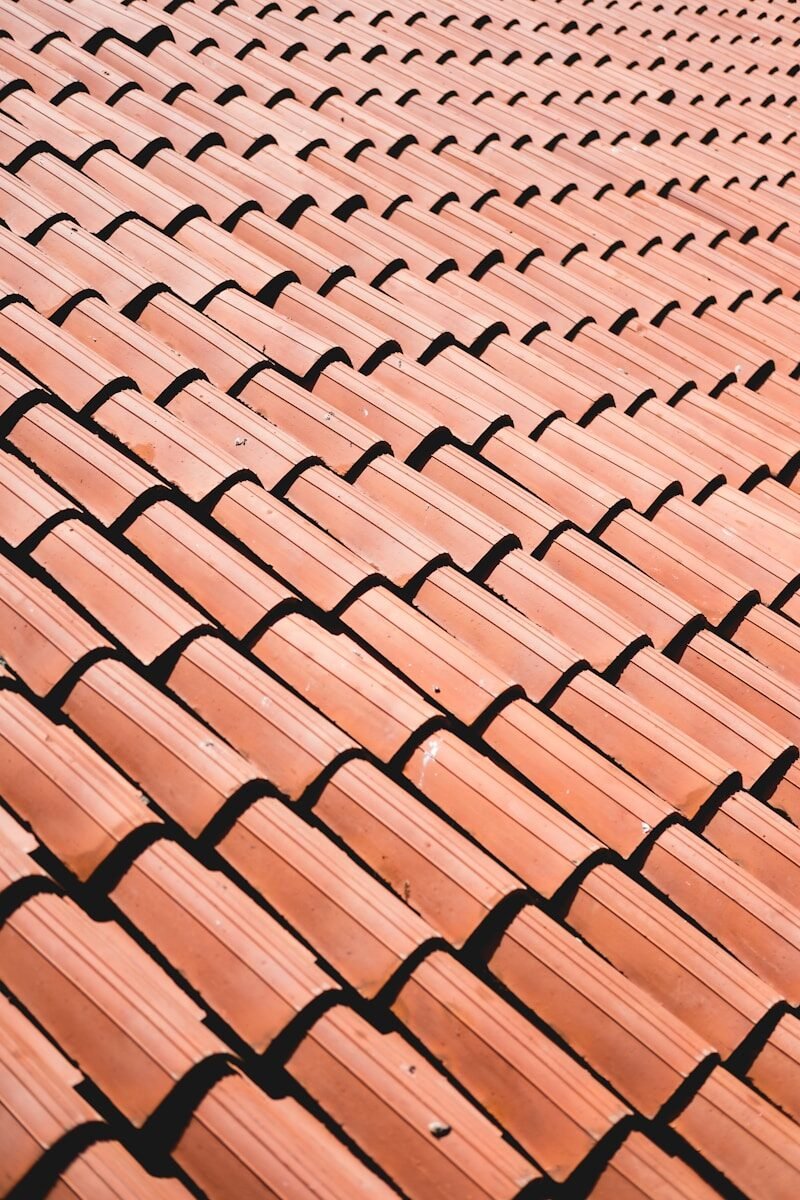
If you’re not sure what you have, look at the underside of your eaves: concrete tiles are uniform grey-stained material when chipped; clay tiles show terracotta orange under any scratched surface.
Why is tile so problematic in the PNW?
This isn’t about tile being a bad material. Tile is excellent in the right climate. It’s about the systematic mismatch between tile’s design assumptions and what actually happens to a roof in 36+ inches of annual rain across 150+ rainy days.
Problem 1: The tile outlasts the underlayment
Tile is essentially weather-resistant rock. The actual waterproofing on a tile roof is the underlayment underneath — typically asphalt-saturated felt on roofs from the 80s and 90s, or sometimes a single-layer synthetic on newer installations. That underlayment has a useful life of roughly 25 to 35 years in our climate.
The tile itself can last 50, 75, even 100 years. So you end up in a situation where the tiles look fine, but the underlayment they’re protecting has failed, leaks have started, and the only repair option is a complete tear-off, underlayment replacement, and tile re-installation — at a cost similar to a full new roof.
Problem 2: Replacement tiles are often impossible to source
When a tree branch breaks tiles, or when concrete tiles crack from foot traffic during maintenance (more on that next), or when the previous owner’s “repair” left mismatched tiles, you need replacement tiles. The problem: most of the major tile manufacturers active in the Portland market in the 80s and 90s have either gone out of business, been acquired and discontinued lines, or stopped serving this market.
We frequently inspect Beaverton tile roofs where the homeowner’s option is “match these specific 1987 Monier concrete tiles” and there is simply no source — not online, not through suppliers, not anywhere. Salvaged tiles from demolition projects sometimes work, but availability is unreliable and never something you can plan a repair around.
Problem 3: Tile is fragile to foot traffic
You can’t safely walk on most concrete tile roofs without breaking them. This is a real problem in the PNW because:
- Roofs need maintenance (moss, debris, gutters)
- Chimneys need cleaning
- Skylights need work
- HVAC, satellite, solar — all require roof access
Every contractor or service tech who walks on a tile roof — including us — is causing some level of damage, even being careful. On a steep tile roof, even moderately careful access can crack tiles in invisible ways that show up as leaks years later.
Problem 4: Weight
Concrete tile typically weighs 900 to 1,200 pounds per 100 sq ft of roof area, versus 250 to 400 pounds for asphalt shingles. Most homes were either specifically engineered for tile loads or aren’t, and converting from a lighter material to tile requires structural review. Going the other direction (tile to lighter material) is unproblematic, but it also reveals: the original construction often shows its age structurally after 30+ years under tile loads.
Problem 5: Moss in the PNW gets between and under tiles
Moss can lift and crack tiles, but more importantly, moss buildup at tile overlaps directs water sideways under the tiles and onto the underlayment. Once water is reaching the underlayment regularly, the underlayment fails faster than its already-marginal lifespan in this climate.
Problem 6: Repairs are specialty work and getting harder to find
Skilled tile roof repair is becoming a lost art in the Portland metro. Newer roofers haven’t trained on tile. Older specialists are aging out. The roofers who genuinely know how to repair concrete and clay tile in this market are increasingly few. Pricing reflects this scarcity.
What does it cost to repair vs. replace a tile roof in Portland?
Tile roof repair costs (Portland metro, 2026)
| Repair Type | Cost Range |
|---|---|
| Replace 5-10 broken/cracked tiles | $400 – $1,200 |
| Repair localized leak (with matching tiles available) | $800 – $2,500 |
| Replace flashing around chimney or skylight | $1,500 – $4,000 |
| Reseat ridge or hip cap section | $600 – $2,000 |
| Remove and reinstall tile section to repair underlayment | $3,500 – $8,000 |
Tile roof full replacement costs (with existing tiles reused)
If your tile is sound and you’re addressing failed underlayment, expect $20,000 to $40,000 for a 2,000 sq ft home — not because the tiles are expensive (they’re already there) but because removing, sorting, and reinstalling tile is intensely labor-intensive and you’ll always lose 5% to 10% of tiles to breakage during removal.
Tile roof replacement with new tile
$25,000 to $55,000+ for a 2,000 sq ft home, depending on tile type. Clay runs significantly more than concrete. Premium imported tiles can push this above $70,000.
Conversion: tile to architectural composition shingle
$15,000 to $25,000 for a 2,000 sq ft home, including tile removal and disposal. For most Beaverton homeowners with aging tile roofs, this is the smart financial answer. You get a 30-year roof, dramatically simpler maintenance, repairable parts available indefinitely, lighter loads on the home, and you eliminate the ongoing tile-fragility problem.
Conversion: tile to composite synthetic slate or shake
$22,000 to $40,000 for a 2,000 sq ft home. Better aesthetics than asphalt, 40-50 year lifespan, lighter than tile, no PNW underlayment longevity issues. For homeowners who want to maintain the “premium roof look” without staying on tile, this is often the right premium choice.
Conversion: tile to standing seam metal
$25,000 to $40,000 for a 2,000 sq ft home. Best long-term performance in the PNW. Aesthetic shift from tile to metal — works well on some homes, wrong for traditional Mediterranean architecture.
When does it make sense to keep your tile roof?
We’re not anti-tile. Some Portland-area tile roofs absolutely should stay tile. You should consider keeping/repairing your tile roof if:
- The roof is under 20 years old and the underlayment is still sound
- You have a Mediterranean, Spanish Colonial, or Mission-style home where tile is genuinely architecturally correct
- Your tiles match a specific available product line (rare, but happens)
- Your home was specifically engineered for tile loads and converting would lose that engineering benefit
- You’re prepared for the higher repair costs and access limitations
- You plan to live there long-term and have budget for the eventual full re-roof
We have customers in Lake Oswego, Dunthorpe, and the West Hills with beautiful clay tile roofs we maintain rather than convert. Tile in the right architectural context, well-maintained, with realistic expectations, is a perfectly legitimate roof choice.
When does it make sense to convert from tile to a different material?
Convert to composition, composite slate, or metal if:
- Your tile roof is 25+ years old with original underlayment
- You’re seeing leaks and the underlayment is failing
- Replacement tiles for your specific roof can’t be reliably sourced
- Your home isn’t architecturally a “tile home” — many builder-grade Beaverton homes from the 80s and 90s have tile because it was a builder upgrade option, not because the home was designed around tile
- You’re planning to live there 5+ years and want predictable maintenance costs going forward
- The cost differential between “fix the tile properly” and “convert to a better material” is small or favors conversion
How do I know if my tile roof has failing underlayment?
Signs that the underlayment beneath sound-looking tile is failing:
- Active leaks during heavy rain, even though tiles look intact
- Water staining on attic deck or rafters near roof penetrations
- Visible underlayment damage at edges, around vents, or in valleys
- “Washboard” effect where multiple tiles look slightly out of plane (underlayment shrinkage/failure)
- Roof age over 25 years
- Original installation was felt paper rather than synthetic underlayment
- Previous owner did patches to address leaks rather than addressing underlying issues
- You see daylight through the roof from inside the attic
A proper tile roof inspection requires lifting tiles to assess underlayment condition — not something a homeowner should attempt, and not something a quick drive-by quote can tell you.
What about adding solar to a tile roof?
This is its own complication. Solar installations on tile roofs cost more, require specialty mounting hardware, expose the underlayment failure issue earlier (because installation creates penetrations through the underlayment), and can void some manufacturer warranties.
If you’re considering solar and have a tile roof that’s 20+ years old, the right sequence is usually: replace/convert the roof first, then install solar onto a fresh, properly-engineered roof. This is more expensive in year one but dramatically less expensive over the 25-year solar warranty period.
Frequently Asked Questions
Why are tile roofs problematic in Portland’s climate?
Tile is engineered for arid climates with low rainfall and minimal moss exposure. In the PNW, the underlayment beneath the tiles fails before the tiles do (typically at 25 to 35 years), replacement tiles for repairs are increasingly impossible to source from discontinued manufacturers, foot traffic for maintenance frequently breaks tiles, and PNW moss creates specific water-management problems at tile overlaps. Tile can work in the Portland area, but requires more careful expectations than its arid-climate marketing suggests.
Should I replace my tile roof with tile or convert to something else?
For most Portland-area homeowners with 25+ year old tile roofs, conversion is the better financial and practical choice — typically to architectural composition ($15K-$25K) or composite synthetic slate ($22K-$40K). Stay with tile only if the roof is architecturally essential to your home, you can source matching replacement tiles reliably, and you accept the ongoing higher maintenance and repair costs. Many 80s/90s Portland tile roofs were builder upgrades on homes that don’t architecturally require tile — those convert beautifully.
How much does it cost to replace a tile roof in Beaverton?
Full tile-to-tile replacement runs $25,000 to $55,000+ for a 2,000 sq ft home. Tile-to-composition conversion runs $15,000 to $25,000. Tile-to-composite slate runs $22,000 to $40,000. Repair-only on aging tile roofs is often a stop-gap; once underlayment is failing, comprehensive work is needed.
How long does a tile roof last in the Pacific Northwest?
The tiles themselves: 50 to 100 years. The underlayment: 25 to 35 years in PNW conditions. Once the underlayment fails, the roof leaks regardless of tile condition. Practical “leak-free useful life” of a typical concrete tile roof in the Portland area is 25 to 35 years before significant intervention is needed.
Can I walk on my tile roof to clean moss or debris?
Strongly advised against. Even careful foot traffic cracks concrete tiles in ways that may not show immediately but cause leaks later. Hire a roofing or maintenance contractor experienced in tile work who knows how to distribute weight and place feet on the supported portions of each tile.
Why are replacement tiles so hard to find?
Many major tile manufacturers in the 80s/90s Portland market — Monier, Lifetile, certain Westile lines — have discontinued specific products, been acquired, or exited the residential tile market. Color and profile matches that were standard 30 years ago often have no current equivalent. Salvaged tiles are sometimes available but inconsistent. This sourcing problem is the single biggest practical issue with maintaining older tile roofs.
Is a tile roof worth it for a new home in the Portland area?
For most new Portland-area homes, no — the same money invested in standing seam metal or premium architectural composition delivers better PNW performance, better long-term economics, and avoids the issues described on this page. The exception is genuinely Mediterranean-style architecture where tile is part of the design intent and not just an upgrade option.
Can I add solar panels to a tile roof?
Yes, but it costs significantly more than solar on composition or metal, requires specialty mounting hardware, and accelerates underlayment exposure issues. If your tile roof is 20+ years old and you’re considering solar, replace or convert the roof first, then install solar.
Will converting from tile increase my home’s value?
On homes where tile is architecturally appropriate, no — tile is part of the value. On the much more common builder-grade homes where tile was an 80s/90s upgrade option rather than an architectural feature, converting to high-quality architectural composition or composite slate is generally neutral to positive on resale, especially if it eliminates known maintenance issues.
Does my homeowner’s insurance cover tile roof problems?
Sudden damage (storm, fallen tree, hail) is generally covered. Underlayment failure due to age is not — that’s wear and tear. Most tile roof problems we see in Beaverton fall into the wear-and-tear category and aren’t insurance claims. Document any sudden damage events thoroughly and immediately, and have a roofer provide professional assessment for your adjuster.
Get an Honest Assessment of Your Tile Roof
If you have a tile roof in Beaverton or the Portland metro that’s giving you problems, you deserve a contractor who’ll tell you the truth about your real options — including the option that doesn’t involve us selling you new tile.
Raven Roofing Beaverton offers free tile roof assessments. We’ll inspect underlayment condition, document tile damage, evaluate whether matching replacement tiles are realistically available, and give you honest pricing for repair, full replacement, and conversion options. You decide what makes sense for your home and budget.
📞 Call 503-783-8855 or request a free assessment online.
Raven Roofing Beaverton LLC
4145 SW Watson Ave #350, Beaverton, OR 97005
Oregon CCB #257909 | GAF Certified Plus | CertainTeed Shingle Master | BBB Accredited